VFX Branche
Jeder in der Branche kennt wohl die aktuellen Gespräche über den Zustand der (hauptsächlich amerikanischen) VFX-Firmen, die trotz den Milliarden-Box-Office-Umsätzen ihrer Filme letztendlich mangels Gewinn schließen müssen. Der Ruf nach einer Vereinigung oder Gewerkschaft wird laut.
Während man als gemeiner Artist natürlich schnell am Quengeln über Bezahlung, Arbeitsbedingungen und böse Studios ist, würde man natürlich genauso ungern einfach den Wacomgriffel niederlegen und Konsequenzen ziehen. (Sei es der Lust auf den Credit oder einfach der Spaß an der Arbeit geschuldet bzw. der Angst als Freelancer einen schlechten Ruf zu kriegen.) Wo also den Hebel ansetzen ohne gleich die ganze Branche ändern zu müssen, was spätestens beim outsourcing nach Indien oder Osteuropa schnell eine weltweite Übereinkunft erfordert?
Scott Squires auf Effects Corner hat einen guten Artikel geschrieben, der erstmal die Grundproblematik von VFX in einer Filmproduktion untersucht: Effekte werden als “externe Dienstleistung” zum Fixpreis verkauft, obwohl sie erstens absolute Maßanfertigung oder sogar technisches und kreatives Neuland sind, zweitens die VFX-Szenen eine im Vergleich zu Realdrehs unglaubliche Menge an Änderungen/Revisionen erfahren, drittens zum Zeitpunkt des Biddings der endgültige Umfang der nötigen VFX-Arbeiten nicht klar ist und viertens die Deadline dann nicht von Seiten der VFX sondern von Seiten der Produktion gesetzt wird.
So kann man in keinem anderen Bereich mit Menschen umgehen, die einem Maßanfertigungen machen (Anzüge, Autos, Häuser…). Lesenswert.
Ich glaube die Lösung wird nur eine win-win-Situation sein können, bei denen die Seite die das Geld ausgibt (also die Studios) merken, dass sie bessere Qualität zum selben Preis bekommen können (Gewerkschaftsauflagen werden sofern sie sich nur auf den Preis auswirken immer unterlaufen werden in einer so schnellen und internationalen Branche). Beispielsweise, wenn die VFX wieder direkt für die Produktion (und sogar auf deren Gelände) arbeitet statt für Firmen die einen personellen Overhead sowie Auftragslöcher finanzieren müssen. Ein schnelles Auf- und Abbauen einer Produktionspipeline wäre dann von Nöten, aber wenn man sieht, wie jede Firma im laufenden Betrieb über Jahre ihre eigene Pipeline zusammenschustert…
Hier wäre eine komplette Open-Source-VFX-Pipeline-Software willkommen, die zumindest das Spielfeld für kleinere Teams glättet, die dann so schnell losstarten können wie man sonst eben die Renderkisten bestellt und anstöpselt (dass das dann nicht für Avatar genügt ist klar). Nur bislang hütet jede Firma ihre Scripte (zu Recht) als Wettbewerbsvorteil bzw. veröffentlicht nur Bruchstücke, die andere wiederum mit viel Klebeband in ihre Pipeline integrieren müssen. Wieviel tausend mal allein in Deutschland das Rad neu erfunden wurde, weil verschiedene Softwareprodukte unter eine Decke gebracht werden sollten oder erstmal die eklatanten Schwächen des Windows-Explorers bei der versionierten Verwaltung von Einzelbildsequenzen umgangen werden mussten…
Oder wäre das nur mal wieder der Versuch, Symptome technisch zu lösen statt an die Wurzel zu packen? Food for thought…
Algorithms
Adobe demonstrates a future Photoshop feature called “Content-Aware Fill” that is the healing brush on crack. It’ll “extrapolate” image patterns to remove unwanted elements or extend landscapes.
Looks pretty amazing in this youtube video:
httpvh://www.youtube.com/watch?v=NH0aEp1oDOI
It’s probably based on some Siggraph paper. For example, the content-aware-resizing that Photoshop has since CS4 was also demoed at Siggraph first:
httpvh://www.youtube.com/watch?v=c-SSu3tJ3ns
The algorithms that are currently developed in this field are simply amazing. Here’s the one that will put me out of work in a few years: automatic image composition based on a simple doodle:
Sketch2Photo: Internet Image Montage from Tao Chen on Vimeo.
Or this one on image stabilisation:
httpvh://www.youtube.com/watch?v=3TlCGh5Pc90
And finally this all-time favourite from 2007 (!) that apparently still hasn’t made it into a commercial product: An algorithm that seamlessly inserts high-resolution photos into a low-resolution video. Or removes unwanted elements. Or removes reflections. Or seamlessly changes what was behind those reflections.
Using Photographs to Enhance Videos of a Static Scene from pro on Vimeo.
Tilt/Shift
Sometimes an advertising idea is pure genius. The kind of “that’s so cool and easy, why didn’t anybody think of this before?”. Like this German telecom commercial with a tilt/shift lens.
And then you find out that indeed somebody thought about it first and that the ad is at worst a rip-off and at best a commissioned piece of work. But pretty to look at nevertheless!
Here’s a piece of an Australian photographer who utilized that look on a number of clips:
MINGR Jewelry
Just before Christmas I finished an HDTV commercial for China’s largest gold, platinum and diamond manufacturer featuring Japanese-Brazilian model Akemi Katsuki.
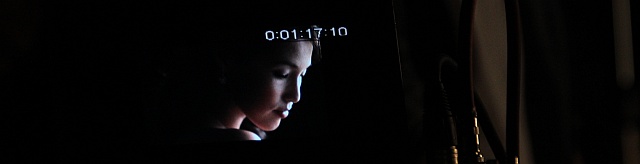
VFX were done at Pixomondo’s Shanghai office where I had the honor to fill the positions of art director & lead compositor. Thanks to my fellow artists for the great and hard work: Simon (particle FX), Jonas (VRay), Lin Kai (modelling), Benson (digital beautification), Mael, Max, Robert and Steffi (additional compositing) as well as Andy (coordination and interpretation). Video clip coming soon.
Director: Stepby Leung
Production: Standard Work Productions
VFX: Pixomondo
Format: 1080p, 30″ – 15″ – 10″ – 7.5″ – 5″
CN 2009
Avatar
 Oh my, what a cinematic milestone. The storyline is a bit of a nerd’s juvenile Mechwarrior dreams mixed with clichés from Pocahontas, but we’re not wearing those heavy unwieldy 3D glasses for the story, right? The level of realism they achieved when it came to motion capturing and CG environments was incredible. The camera moves felt very real, and the 3D really was as great as they claim it is.
It worked best for narrow spaces and closeup shots of the actors. The shots where they added defocused elements very close in the foreground mostly looked weird though, because these things get cut off in mid-air by the edges of the screen. The Chinese subtitles, floating in the air in front of the screen, were an unusual but funny addition.
Anyway, quite an experience and it I hope the technology becomes common knowledge sooner rather than later so that directors can afford to do interesting plots or arthouse stuff in 3D/CG instead of just blockbusters. And some lighter glasses.
Ninja Assassin Teasers
Some new Ninja Assassin teasers are up on Youtube! In case you don’t know about the film, check out IMDB. In a nutshell, it’s bloody ninja action directed by James McTeigue (V for Vendetta), written by J. Michael Straczynski (Babylon 5) and produced by the Wachowski Brothers (Matrix).
A bunch of German VFX houses were involved… RISE in Berlin, Trixter in Munich and Pixomondo in Ludwigsburg. I’ve freelanced for the latter one and a few of the shots I had worked on almost a year ago can finally be seen in those teaser clips. Enjoy!
(The clips can’t be embedded here, so just click twice to watch them on Youtube. They’re even in high quality.)
httpvh://www.youtube.com/watch?v=E-1sCJ5qqcs
httpvh://www.youtube.com/watch?v=RzGsU8oTr-M&NR=1
Free Greenscreen and Tracking Plates
VFX Supervisor Scott Squires’ blog “Effects Corner” links to some nice and freely available greenscreen footage from Hollywood Camera Works. I’m probably the last guy to discover these, but nevertheless the plates are a great training resource. Each shot has some notes about possible keying and matchmoving problems.

And by the way, Scott also has some great articles on various areas of VFX like pre-production, workflow and shot breakdowns.
