

Dur zu Moll zu Dur
Das ist mal ein netter Kanal bei Youtube: Das Vater-Tochter-Gespann hinter “MajorVsMinor” transponiert Popsongs mit Hilfe “mehrerer Programme” (so heißt es diffus in einem Kommentar) von Dur zu Moll oder umgekehrt. Die Lieder kriegen einen unglaublich anderen Touch. Manche klingen scheiße, viele Videos sind natürlich auch von Youtube’s Auseinandersetzung mit der GEMA betroffen und in Deutschland ohne Proxy nicht abrufbar. Aber manche sind pures Gold.
Hier zum Beispiel die Dur-Version von “Sweet Dreams”, die ungewohnt fröhlich klingt:
Ob-La-Di, Ob-La-Da als traurige Moll-Version (die Aufnahmequalität ist leider nicht so der Hit)
Specular Highlights Compositing Reference
Welcome to the first installation of a series where I tell you how to improve your CGI/compositing by looking at frickin mother nature for reference.
Often CGI lacks that last bit of realism. In the case of outdoor surfaces it can be due to the lack of proper specular highlights. They require high sampling rates, they tend to flicker, but it pays off to spend some compositing effort on then – even if you ultimately paint and reproject them manually.
The key to realistic atmospheric effects are proper reference photos. Here’s a photo of one of Chicago’s commuter trains glistening in the morning sun:
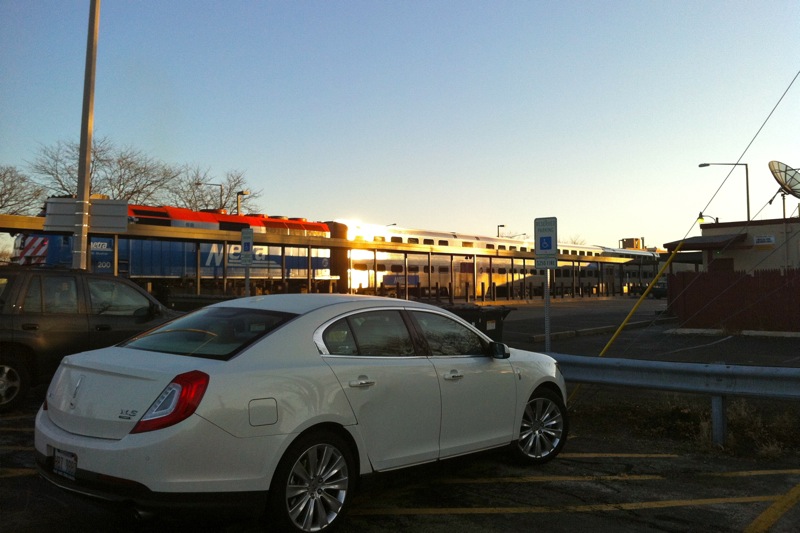
The glow that seems to eat away from the steel roof looks like that because it comes from a reflection that’s magnitudes brighter than the rest of the image. To recreate this in comp you need to work in linear color space with values way above 1.0 and a sharp, super-bright yellowish reflection of the sun. Don’t be afraid to go up to 20 or even higher.
Now add a tiny blur to the image (the natural scattering of the air and the lens) so you hardly notice it on most of the image. The bright spot, however, will grow into a large glow not unlike one in the photo (then fine-tune your comp with different blur radii at different strengths or add a blurred luma key of the highlights once more).
Look at the car now. It’s parked in the shadows yet it doesn’t look murky or dark at all. It’s lit solely by the sky’s ambient light which is still bright enough to cause a lot of specular highlights. In reality – and from the point of view of an unbiased renderer like Arnold for example – there is no “specular pass” anyways. It’s all just tiny glossy reflections of a bright light source. And the sky is more than enough. I can’t tell you how to render rims like these but as a compositor you should be prepared to fake some highlights using a normal pass for example if the 3D lacks those details.
Some more thoughts about why the car in this picture looks so well-integrated (yeah, it’s real):
- The color of the highlights matches the sky. Especially the area around the front bumper turns into a mirror-like surface due to the Fresnel properties of the car paint. It matches the sky in color and brightness.
- The sun’s reflection on the train is so bright that it reflects once more in the car’s rooftop. Your raytracer would need to calculate at least two bounces!
- The wheels are black and you can hardly distinguish them from the car’s underside. Yes, clients would tell you they want to see the rubber if this were CGI. But try to balance it. Too much detail in the shadows would make this image look like one of those fake HDR images.
Feedback Loop
Being a VFX freelancer includes being able to judge the amount of work a task might take. Usually, that’s a thing artists loathe. After all, who knows how much nitpicking by the supervisor(s) and/or director there will be before a shot is approved as “final”?
There is, however, a simple way to train your judgment and get some experience for free: look at a shot you’ve finished a few weeks ago and pretend you’ve just been asked for the number of days you’d think you need to finish it. Then, compare this to the hours you’ve clocked in your studio’s attendance sheet or timekeeping system.
Pick appropriate shots.
Don’t pick the one you know turned into a nightmare because halfway through a simple rig removal the director didn’t like the dress of the actress anymore and requested a CG cloth simulation. Don’t pick the shot that was used to develop a CG character’s shading because that probably took way more time for reasons that had nothing to do with the shot itself.
Just judge your workload.
If you only did compositing, don’t make up numbers for matchmoving, lighting, shading and matte paintings. Except if you also did some of these tasks.
Don’t cheat.
This exercise assumes that you have no clue how many hours you’ve really worked on a shot. If you have only worked on shots one at a time and are completely aware of how many days it took you to finish each, it’s for the birds.
Add 50%.
I’m not kidding, just add 50% to whatever number you came up with.
Before VFX
With the vfx industry being shaken by high-profile post houses closing doors or filing for chapter 11 and Oscar winning directors being oblivious of the effort that went into their movie’s VFX, here’s a nice Tumblr of movie stills before vfx have been added. I’ve taken two of those images and went looking for trailers and promo pictures that showed the final scene as best as possible:
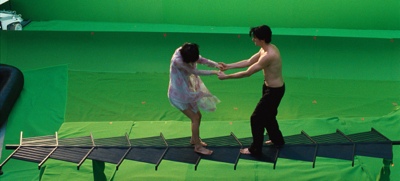

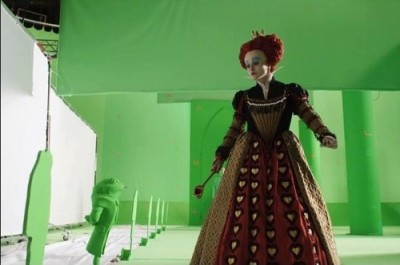

But even with such a comparison, one can hardly describe the amount of work, changes and revisions that went on in between. VFX isn’t like building a car where there’s a clear blueprint on how many wheels there should be and how many revolutions the engine needs to perform.
When a director thinks that VFX should be cheaper than they already are, he should have an assistant read to him the feedback he gave vfx artists who worked on his shots over the course of a year and imagine himself talking like this to his car dealer, barber or chef 🙂
Ninjas In The Sock Drawer
Corridor Digital have done it again: Awesome dubstep video – slash – VFX demo. And it’s got KITTENS!
AFAIK they’re still doing it all with AfterEffects. But camera angles of life action and green screen plates and lighting demonstrate that they’re really putting in a lot of thoughts into their videos before they start shooting.
That’s better than what I usually have to handle on German mainstream movies where directors and DOPs are stuck in the 90’s when it comes to pre-production planning of VFX (“Storyboards? Animatics? Blocking? Nah, we’ll just roll the camera in any way we like and you guys will figure it out later. It’s greenscreen after all, I could do it on my Avid! Hey, why doesn’t it look like Harry Potter? Sure we’ve only paid you 1% of its budget, but that movie was like a decade ago.”)
